Part 1 of 5 — The Shock Absorber You Never Knew You Had

This is the first in a five-part series exploring menopause, the nervous system, and what the body has been silently carrying and what it does when it can no longer stay silent. The series is written for women moving through this transition. For the partners and people who love them, and for anyone curious about what midlife is really asking of us.
There is a version of menopause that medicine tends to give us. It is a story of declining hormones, uncomfortable symptoms, and the long list of things to do about them. Hot flashes, mood swings, sleep disruption, anxiety arriving seemingly from nowhere. The answer is more often than not to manage the symptoms, adjust the dosage and carry on.
But there is another story, one that science is now beginning to confirm, and that older traditions around the world never forgot. The story is this: menopause is not the body breaking down, but rather the body breaking through. And what it breaks through to is the truth of everything it has been carrying below the surface for decades.
To understand why, we need to start somewhere most of us have never been invited to look: at the extraordinary, invisible work that hormones have been doing inside the nervous system, every single day, for most of a woman’s adult life.
Throughout the reproductive years, estrogen and progesterone do a remarkable amount of work that has nothing to do with reproduction. They function as a kind of neurological shock absorber, quietly managing the brain’s fear responses, keeping the stress system from running too hot, supporting the chemistry of calm, and maintaining the nervous system’s ability to rest and recover.
When The Buffer Breaks: Part 1 -The Shock Absorber
Think of it like this, the amygdala, the brain’s alarm system, is naturally prone to scanning the environment for danger. Estrogen keeps that alarm both sensitive and balanced, helping the brain distinguish real threat from old memory. Progesterone supports the brain’s own natural braking mechanism, the system that signals to the nervous system that it is safe to slow down.
Together, these hormones also buffer cortisol (the primary stress hormone), support the production of serotonin (the molecule most associated with emotional steadiness), and help maintain what is known as vagal tone, the physiological foundation of feeling calm, connected, and grounded in the body.
This is a five-system buffer and it operates simultaneously, continuously, and almost entirely invisibly. Most women have no idea it exists, until that is, it begins to dissolve.
During perimenopause, that dissolution is not gradual and graceful. Progesterone drops first, and it drops steeply. Estrogen follows and all five systems are destabilised at once. everything that was being held below the threshold of conscious experience, that which was being managed, biochemically, for years, begins to surface, revealing what lies beneath.
In the week, we will follow the disclosure into every corner it reaches
In the week, we will follow the disclosure into every corner it reaches: into childhood, into relationships, into the bodies of men at midlife, into the wisdom of ancient traditions, and into the practical question of what it means to work with what is surfacing rather than push it back into silence.
The body has not lost the plot, it is finally telling the truth.
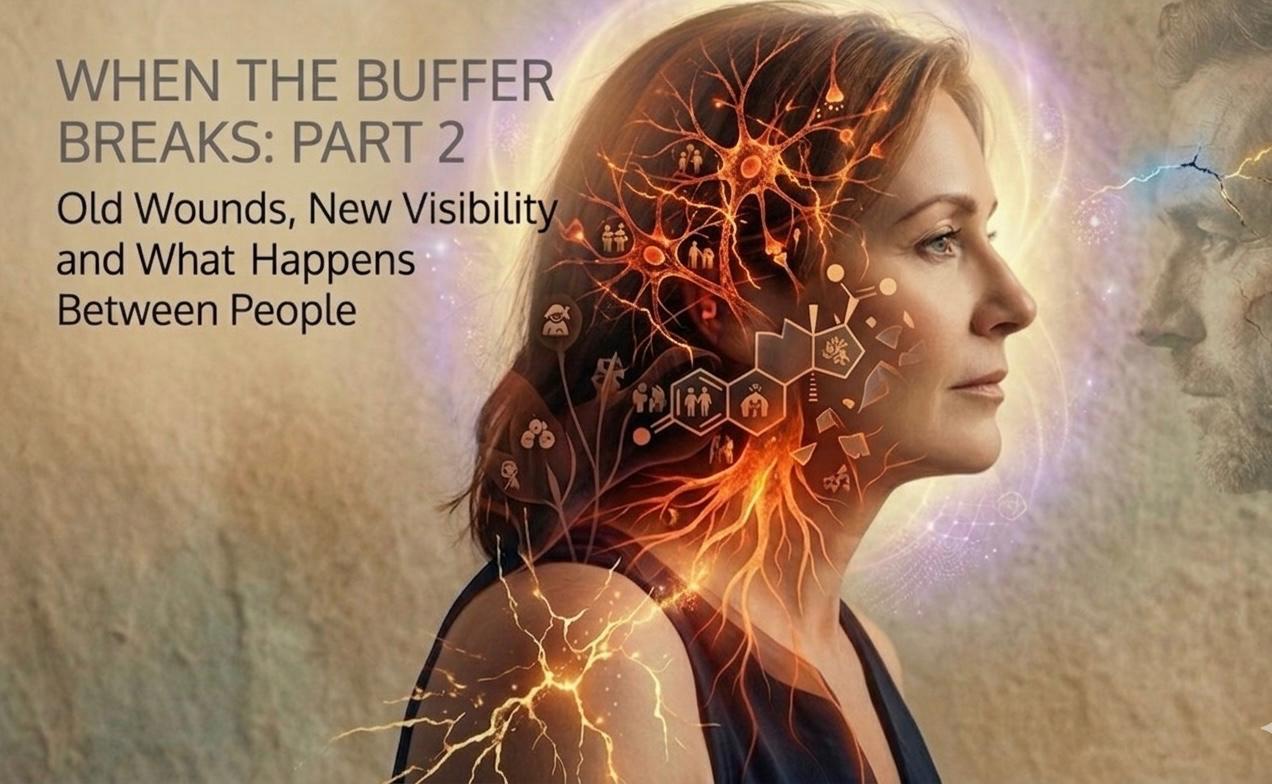
Look out for Part 2 below of this series. We will be looking at one of the most striking findings in recent research: that menopause does not create new psychological problems, it reveals old ones that were being chemically suppressed all along. And we will follow that discovery into the heart of relationships, where the effects are perhaps most viscerally felt.
Blessings
Amanda
Website | Instagram | Facebook
Part 2: When The Buffer Breaks: Part 2 -Old Wounds, New Visibility
Part 3: When The Buffer Breaks: Part 3 – The Quiet Reckoning
Part 4: When The Buffer Breaks: Part 4 – Working With What Is Surfacing
Part 5: When The Buffer Breaks: Part 5 – The Body Is Not Lying