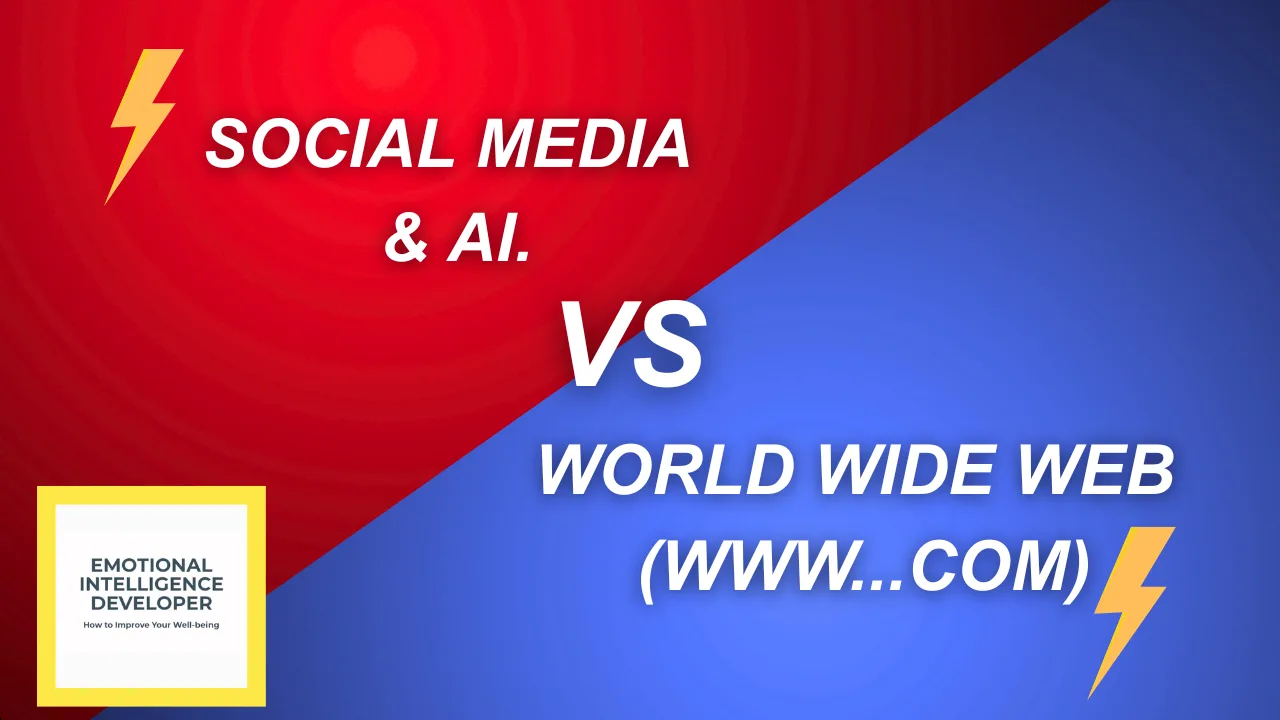
The fascinating tension of the open, decentralized “old web” versus the algorithmic, closed ecosystems of modern social media.
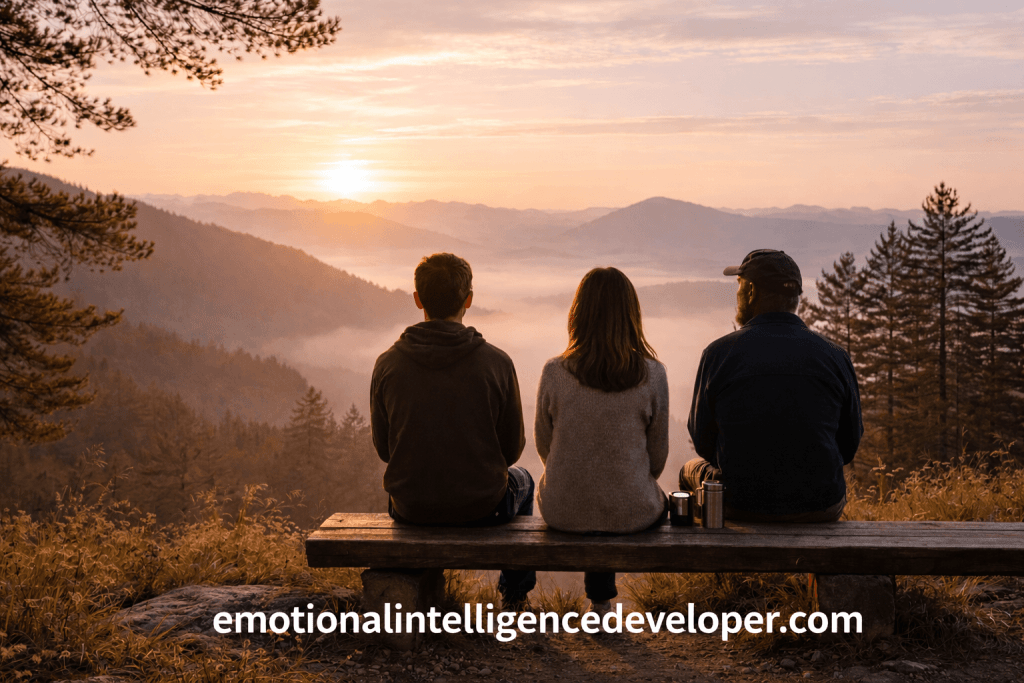
In the organic World Wide Web era of the (www. Emotional intelligence developer dot com) you find websites like mine, emotionalintelligencedeveloper.com that helps people “see with their minds, what other people cannot see with their eyes.” The World Wide Web is fighting the new algorithmic, closed ecosystems of modern social media platforms like X.com, Facebook, Instagram, and TikTok who have money-based strategies behind them, in my opinion. We forget that the interests of these social media companies are for the exclusive benefits of their platforms and not your mental wellbeing.
Why we need to go back to the forgotten World Wide Web
Did you know that the internet has changed? “The internet has fundamentally shifted from a gateway to a destination. Nearly 70% of all searches now end with “zero clicks” to external websites. Instead of sending traffic to independent creators, major platforms use AI summaries to answer questions directly on their own pages. This keeps users trapped in their ecosystem to maximize advertising revenue and collect user data, starving the open web of the traffic it needs to survive.” (Data source: SparkToro & Similarweb Digital Trends Report)
Google has changed. The once amazing search engine I used to use is fighting to stay ahead of its competitors. Meaning, being quick to become AI attractive with a human cost. ‘Where is my website? I don’t see it pop up anymore when I search for it. I need people to find me, log on, and benefit from the information my community is posting.’ This was Google a few years ago. Google once had the World Wide Web reach, and we were loyal users.
Today, when you use Google and other search engines, what you get is a totally different experience. If people search and find diluted AI answers deemed convenient and quick, users lose out on the full body of work from a website. AI answers are quick to read a quote like for example, “see with their minds, what other people cannot see with their eyes…” but if you don’t get the opportunity to go and read the full message on my website, you can misunderstand the AI answer which is a big disadvantage.
10 Reasons Why Visiting Our Website Beats AI Answers
While social media is fun and AI answers are convenient, skipping actual websites does a massive disservice to your learning. The information we gather for our users is placed on our websites for a reason.
Here are 10 distinct advantages of visiting an actual website over relying on AI-generated summaries:
1. Nuance and Full Context: AI summaries deliberately strip away background information and caveats to give a brief response. A complete article allows you to see the “why” and “how” behind a concept, preventing misunderstandings caused by oversimplification.
2. Verified Accuracy and Factchecking: Artificial intelligence is prone to “hallucinations” making up facts or mixing up concepts with total confidence. Original websites feature vetted data, editorial oversight, and direct links to primary sources you can verify.
3. Human Expertise and Authority: AI does not have lived experience; it simply predicts the next likely word based on its training data. Websites are written by human specialists, industry professionals, and creators who have spent years studying their craft.
4. Direct Access to Tools and Downloads: Websites house functional features that AI cannot replicate in a text box, such as custom calculators, interactive maps, or searchable databases. This is also where you can download high-quality guides, official templates, and original media.
5. Community and Shared Experiences: Section areas like comment feeds and forums provide real-world peer feedback, troubleshooting tips, and alternate viewpoints. Visiting a website connects you directly with a community of like-minded people.
6. Personal Accountability and Trust: A website explicitly tells you who wrote the content, when it was updated, and how to contact them. AI answers are completely anonymous, leaving you with zero recourse if the information provided is wrong or harmful.
7. Discovering Unexpected Value: When scrolling a website, you naturally stumble upon related articles, hidden gems, and helpful resources you didn’t even know to search for. AI gives a rigid, singular answer to your prompt, eliminating organic exploration.
8. Direct Economic Support for Creators: Visiting a website provides creators with the traffic, ad revenue, and engagement they need to keep creating. If everyone stops visiting websites, creators will stop publishing, leaving the AI with no new human information to learn from.
9. Up-to-Date and Real-Time Relevance: Quality websites are updated dynamically the moment news breaks or new data becomes available. Many AI models operate on older training cutoffs or suffer a delay in parsing live web data, causing them to miss critical, recent updates.
10. True Intellectual Ownership: Reading a comprehensive webpage allows you to synthesize the information and form your own conclusions. Relying entirely on an AI summary means letting a corporate algorithm choose exactly which perspectives to show you and which ones to hide.
Conclusion
Reasons why you need to go back to using the World Wide Web
Remember that not all websites are good for you. While social media is fun and AI answers are convenient; you’re doing yourself a big disservice when you skip our websites. The information on our platforms when used correctly gives you an advantage in your day-to-day activities. Find reputable websites to bookmark and use. Go back to the World Wide Web. Websites like emotionalintelligencedeveloper.com and others are keys to decentralizing yourself from AI and social media.