Signs Your Communication Needs Attention
You do not need to wait until a relationship is breaking down before improving communication. These signs show that something needs to be handled with more honesty, calmness, and emotional awareness.
- You keep having the same argument without solving the real issue.
- You feel nervous to say how you really feel.
- You often feel unheard, interrupted, or dismissed.
- You avoid conversations because you expect conflict.
- You use silence, sarcasm, or withdrawal instead of direct communication.
- You feel responsible for keeping the peace all the time.
- You explain yourself repeatedly but nothing changes.
- You feel emotionally drained after speaking to someone.
These signs do not always mean the relationship must end. But they do mean the pattern needs to be seen clearly instead of ignored.
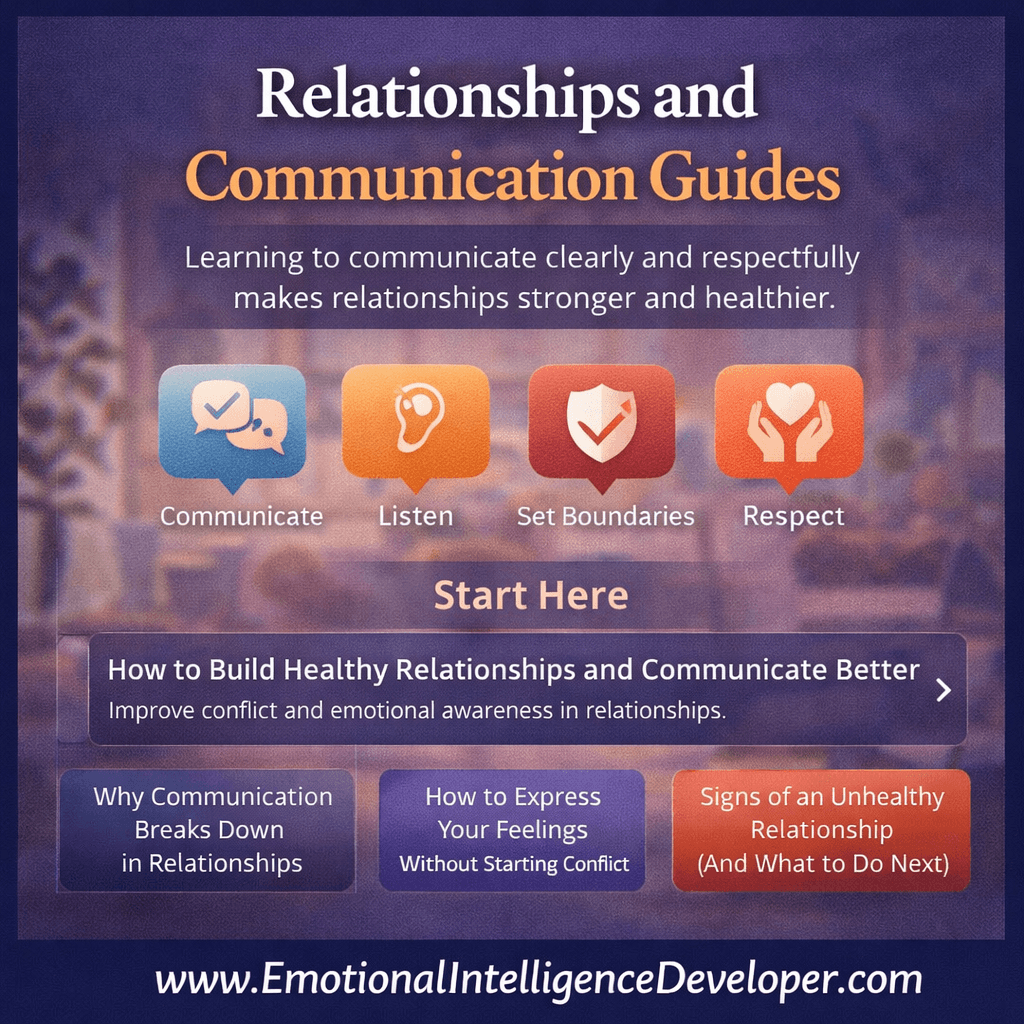
Relationships and Communication Guides
Healthy relationships are built through communication, respect, emotional awareness, and boundaries. When people learn how to speak clearly, listen better, and handle conflict calmly, relationships become stronger and more balanced.
This hub brings together practical guides to help you improve communication, understand relationship patterns, and protect your wellbeing in the connections that matter most.
Start Here
Recommended First ReadHow to Build Healthy Relationships and Communicate Better
Learn how to improve communication, handle conflict in a healthier way, and build stronger relationships through respect, honesty, and emotional awareness.
What causes relationship and communication problems?
Most relationship problems are not caused by one single event. They often grow from repeated patterns like poor communication, emotional reactions, unclear expectations, and weak boundaries. Understanding these patterns is the first step toward changing them.
Common causes include avoiding difficult conversations, assuming others know how you feel, reacting from emotion rather than intention, and not knowing how to set or respect limits. The good news is all of these are learnable skills.
Guides to Improve Relationships and Communication
Why Communication Breaks Down in Relationships
Understand why misunderstandings happen and how to improve communication step by step.
How to Express Your Feelings Without Starting Conflict
Learn how to speak honestly and calmly without turning conversations into arguments.
Signs of an Unhealthy Relationship (And What to Do)
Recognise the warning signs of unhealthy relationship patterns and learn what steps to take next.
How to Set Boundaries Without Feeling Guilty
Discover how to protect your time, energy, and emotional wellbeing through healthier boundaries.
How do healthy relationships support wellbeing?
Healthy relationships can reduce stress, improve emotional stability, and help people feel supported and understood. When we feel safe in our relationships — at home, at work, or in friendships — it becomes easier to manage emotions, make decisions, and move through difficult moments.
Better communication and stronger boundaries often lead to more peaceful and balanced daily life. People who feel heard and respected in their relationships also tend to experience lower anxiety, greater confidence, and more satisfaction overall.
Connection is one of the most powerful protective factors for mental health. Improving how you communicate and relate to others is one of the most impactful things you can do for your long-term emotional wellbeing.
Explore Related Guides
Helpful External Resources
These trusted resources offer additional insights into communication, relationships, and emotional wellbeing.
Why Relationships Often Become Difficult
Most relationship problems do not start with one big argument. They usually build slowly through small moments where people feel unheard, dismissed, misunderstood, controlled, ignored, or emotionally unsafe.
When communication is weak, people begin guessing each other’s intentions instead of asking clear questions. That creates defensiveness, resentment, silence, overthinking, and repeated conflict.
- Poor listening: one person speaks, but the other is already preparing a defence.
- Unclear expectations: people assume their partner, friend, or family member should “just know”.
- Emotional reactions: anger, fear, guilt, or shame take over before the real issue is understood.
- Avoidance: difficult conversations are delayed until frustration becomes too heavy.
- Weak boundaries: one person keeps giving too much and later feels used, tired, or resentful.
Watch: Attention-Seeking Behavior: When “Just Ignore It” Doesn’t Work
How to Communicate Without Making Things Worse
Better communication does not mean saying everything perfectly. It means slowing the conversation down enough so both people can understand what is actually happening.
- Start with the issue, not the attack: say what happened instead of insulting the person.
- Use “I” language: explain how something affected you without blaming immediately.
- Ask before assuming: “What did you mean by that?” is better than reacting to a guess.
- Pause when emotions rise: a calm break is better than saying something damaging.
- Repeat what you heard: this shows the other person that you are listening, not just waiting to reply.
- Stay with one topic: bringing up five old problems usually destroys the conversation.
Practical Relationship Reflection Questions
Use these questions when you are trying to understand a relationship more clearly. They help you move from emotional confusion to practical insight.
- Do I feel safe being honest with this person?
- Do we solve problems, or do we repeat them?
- Am I communicating clearly, or am I expecting them to guess?
- Do I listen to understand, or do I listen to defend myself?
- What boundary have I avoided setting because I fear conflict?
- Does this relationship give me peace, pressure, confusion, or growth?
- What conversation needs to happen instead of being avoided?
What Healthy Communication Looks Like
Healthy communication is not about winning the conversation. It is about creating enough honesty, respect, and emotional control for both people to understand each other.
- Both people can speak without being mocked or punished.
- Disagreements do not automatically become personal attacks.
- Boundaries are respected instead of treated as rejection.
- Problems are discussed before they become resentment.
- Each person takes responsibility for their own reactions.
- Listening matters as much as explaining.
A healthy relationship does not mean there is no conflict. It means conflict is handled with maturity, honesty, and care.
Frequently Asked Questions
What is communication in relationships?
Communication in relationships is the way people express thoughts, feelings, and needs while also listening and understanding each other. Healthy communication builds trust and connection.
Why does communication break down in relationships?
Communication often breaks down because of assumptions, lack of listening, emotional reactions, or avoiding difficult conversations. Over time, this can create distance and misunderstandings.
How can I improve communication with my partner?
You can improve communication by listening actively, speaking honestly without blame, staying calm during conflict, and making sure both people feel heard and respected.
What are signs of poor communication in a relationship?
Common signs include frequent misunderstandings, unresolved arguments, feeling unheard, avoiding conversations, and emotional distance.
Can communication problems be fixed?
Yes. Communication can improve with effort, awareness, and practice. Small changes in how you listen and express yourself can make a big difference over time.