How to Set Boundaries Without Feeling Guilty
Setting boundaries without feeling guilty means learning how to say no, protect your time, and express your limits in a calm and respectful way. It does not mean being rude or selfish. It means being clear about what you can and cannot give without damaging your energy, your wellbeing, or your peace of mind.
Many people feel guilty when they set boundaries because they are used to putting others first. You may worry about disappointing people, being misunderstood, or being seen as selfish. But constantly saying yes when you mean no can lead to stress, resentment, and emotional exhaustion.
Simple ways to set boundaries without guilt
- Pause before agreeing so you don’t respond out of pressure.
- Keep your response simple without over-explaining.
- Use calm, respectful language instead of defensive wording.
- Accept that discomfort is normal when you start setting limits.
- Stay consistent so people learn how to treat you.
Why this matters
Boundaries protect your mental health, reduce stress, and help create healthier relationships. Saying no when needed is not wrong — it helps you stay balanced and avoid burnout.
Why you feel guilty when setting boundaries
Feeling guilty when setting boundaries is common. It often comes from habits formed over time, especially if you are used to keeping peace, helping others, or avoiding conflict.
People-pleasing habits
You may feel responsible for keeping others happy.
Fear of rejection
You worry people will react negatively or distance themselves.
Conflict avoidance
You try to avoid tension even if it costs your wellbeing.
Self-doubt
You question whether your needs are valid.
How to Set Boundaries Without Feeling Guilty
To set boundaries without guilt, communicate clearly, respect your own needs, and understand that protecting your time and energy is not selfish. Healthy boundaries improve relationships, not damage them.
How to set boundaries without feeling guilty:
- Be clear and direct about your limits
- Say no without over-explaining
- Stay calm and respectful
- Accept that not everyone will agree
- Prioritise your wellbeing
Why Setting Boundaries Feels Difficult
Many people feel guilty when setting boundaries because they fear disappointing others, creating conflict, or being seen as selfish.
If you are used to people-pleasing or avoiding conflict, saying no can feel uncomfortable at first.
Why do boundaries make you feel guilty?
Guilt often comes from beliefs you have learned over time.
- You think saying no means being rude
- You feel responsible for other people’s emotions
- You want to avoid conflict at all costs
- You are used to putting others first
But setting boundaries is not about hurting others. It is about respecting yourself.
How do you set boundaries in a healthy way?
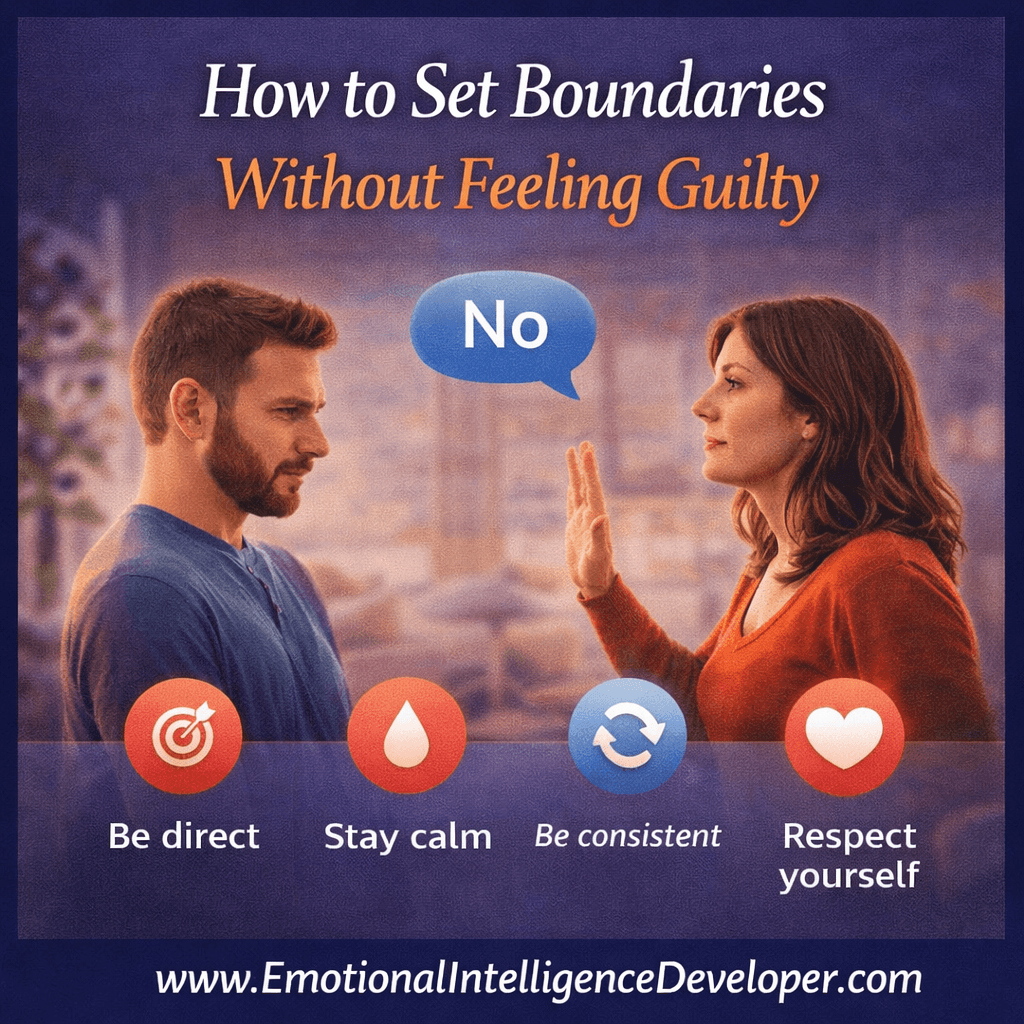
Healthy boundaries are clear, calm, and consistent.
Be direct
Say what you need without avoiding the point.
Stay calm
You do not need to be aggressive to be clear.
Be consistent
Repeating your boundary helps people understand it.
Respect yourself
Your needs matter just as much as anyone else’s.
What happens when you start setting boundaries?
At first, some people may react negatively, especially if they are used to you saying yes.
Over time, the right people will respect your boundaries, and your relationships will become healthier and more balanced.
Boundaries Protect Your Wellbeing
Setting boundaries allows you to protect your time, energy, and emotional health. It helps you build stronger, more respectful relationships.
You are not responsible for keeping everyone happy. You are responsible for taking care of yourself.
Explore More
Watch this video on how to set boundaries
Explore related support
If setting boundaries feels difficult, these pages can help you build confidence, communicate clearly, and protect your emotional wellbeing.
Next step: Start with one small boundary today. One honest response, one clear limit, one moment where you choose yourself without over-explaining.
Helpful External Resources
These trusted resources offer additional insights into communication, relationships, and emotional wellbeing.
- Communication Basics – Psychology Today
- Effective Communication – HelpGuide
- Relationships and Mental Health – NHS
Frequently Asked Questions About Setting Boundaries
Is it selfish to set boundaries?
No. Boundaries are part of self-respect. They help protect your time, energy, and wellbeing.
Why do I feel guilty after saying no?
Guilt often comes from habit, not wrongdoing. If you are used to saying yes, saying no may feel uncomfortable at first.
How do I say no without hurting someone?
You can be calm, clear, and respectful. You don’t need to over-explain — simple and honest communication works best.
What if people react badly to my boundaries?
You cannot control their reaction, only your clarity. Consistent boundaries often lead to more respect over time.
Can boundaries improve relationships?
Yes. Healthy boundaries create clarity, reduce resentment, and build more honest and balanced relationships.