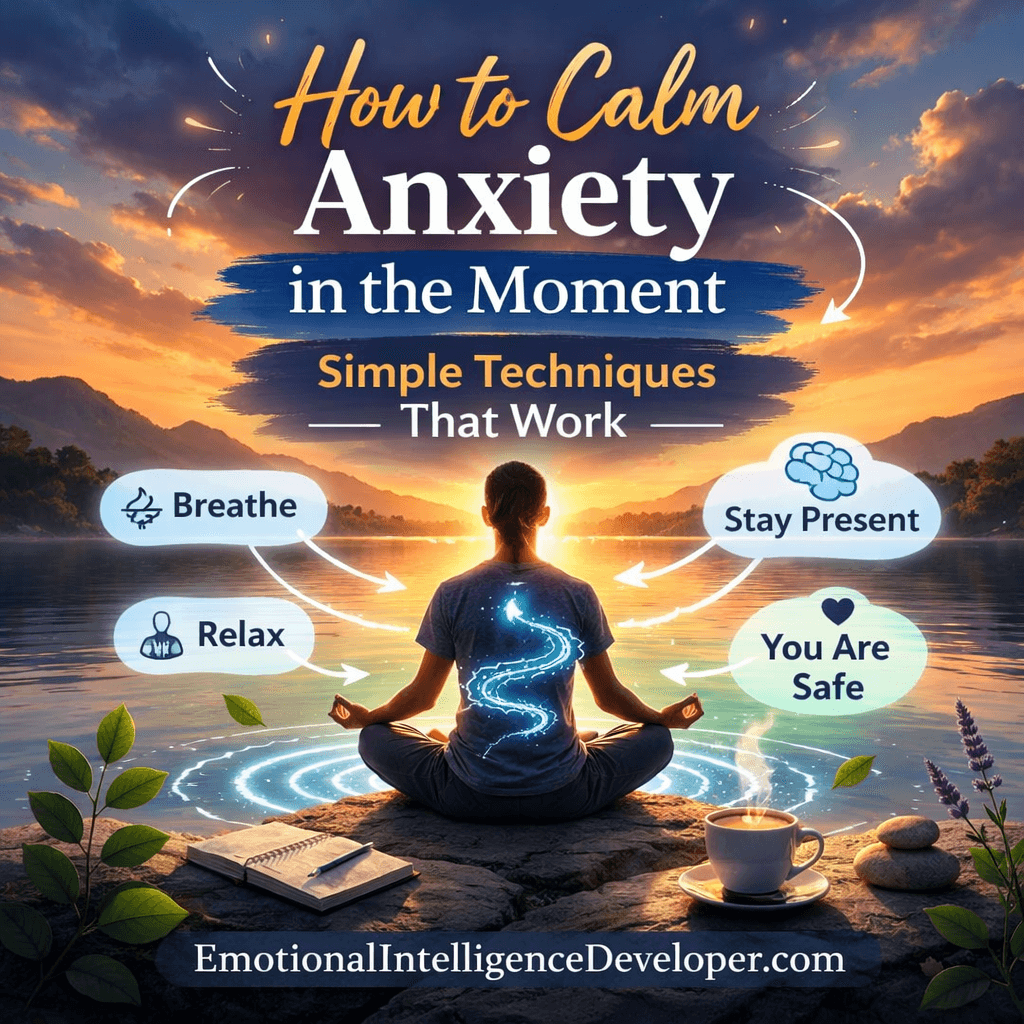
You Can Calm Anxiety in This Moment
If you’re feeling anxious right now, your body may feel tense, your thoughts may be racing, or your breathing may feel shallow.
You are not in danger. Your body is reacting to stress, and it can settle again.
The techniques below are simple, quick, and designed to help you feel more steady, one step at a time.
Quick answer: To calm anxiety in the moment, focus on your breathing, bring your attention back to your body, and gently shift your thoughts away from panic. Simple grounding techniques like slow breathing, naming what you can see around you, and relaxing your muscles can quickly reduce anxiety and help you regain control.
- Take slow, deep breaths (in for 4 seconds, out for 6 seconds)
- Ground yourself by naming 5 things you can see, 4 you can touch
- Relax your shoulders and release physical tension
- Remind yourself that the feeling will pass
- Focus on one simple action to bring your attention back
Why Anxiety Feels So Strong
Anxiety can feel overwhelming because your body is trying to protect you. It reacts quickly, even when there is no immediate danger.
Your heart rate increases, your breathing changes, and your thoughts speed up. This can make it feel like something is wrong, even when you are safe.
The goal is not to fight anxiety, but to gently calm your body and bring your attention back to the present moment.
How to Calm Anxiety in the Moment (Simple Techniques That Work)
Anxiety can come on suddenly. Your heart races, your thoughts speed up, and your body feels tense. In those moments, it can feel like you are losing control.
The goal is not to fight anxiety or make it disappear instantly. The goal is to calm your body and mind so you can regain control step by step.
You don’t need to stop anxiety instantly. You need to slow it down.
What Anxiety Feels Like in the Moment
- Racing heart
- Fast or shallow breathing
- Overwhelming thoughts
- Tension in your body
- Feeling out of control
Simple Techniques That Work
1. Slow Your Breathing
Take a slow breath in through your nose and out through your mouth. Focus only on your breathing for a few moments.
2. Ground Yourself
Look around and name things you can see, hear, and feel. This brings your attention back to the present moment.
3. Relax Your Body
Unclench your jaw, drop your shoulders, and release tension in your body.
4. Talk to Yourself Calmly
Remind yourself: “I am safe. This will pass.”
5. Focus on One Small Action
Shift your attention to something simple like walking, drinking water, or sitting down quietly.
A Quick Reset You Can Use Anywhere
- Breathe in slowly for 4 seconds
- Hold for 4 seconds
- Breathe out for 6 seconds
- Repeat a few times
This helps calm your nervous system and reduce the intensity of anxiety.
Why These Techniques Work
Anxiety is not just in your mind — it is also in your body. When you calm your breathing and body, your mind begins to settle as well.
How This Connects to Overthinking
Overthinking can trigger anxiety, and anxiety can make overthinking worse. Learning to calm your body helps break this cycle.
How Self-Awareness Helps
The more aware you are of your emotions and triggers, the earlier you can catch anxiety and respond calmly instead of reacting automatically.
External Resources
Explore More
Want to explore more anxiety and mental wellbeing guides?
Final Thought
Anxiety can feel intense, but it is temporary.
The more you practice calming your mind and body, the easier it becomes to move through those moments.
You are not losing control — you are learning how to regain it.
Try This First (Quick Reset)
- Take a slow breath in through your nose
- Hold for a moment
- Exhale slowly through your mouth
- Look around and name 3 things you can see
- Remind yourself: “I am safe right now”
Step-by-Step: How to Calm Anxiety in the Moment
- Pause and breathe slowly
Inhale through your nose for 4 seconds, then exhale slowly for 6 seconds. Repeat this several times to calm your nervous system. - Ground yourself in the present
Look around and name things you can see, hear, or touch. This helps bring your mind out of anxious thoughts. - Release physical tension
Relax your shoulders, unclench your jaw, and let your body soften. Anxiety often shows up physically. - Reassure yourself
Remind yourself: “This feeling will pass. I am safe right now.” This helps reduce panic. - Focus on one simple action
Shift your attention to something small, like drinking water, walking, or completing a simple task.
Explore More
Want to manage anxiety and emotional overwhelm more consistently?
More Support for Anxiety and Emotional Balance
Next Step
You don’t need to calm everything at once. Even a small shift in your breathing or focus can help your body settle.
Stay with one simple technique until you feel a little more steady.
Explore More
Want to explore more anxiety and mental wellbeing guides?
Frequently Asked Questions About Calming Anxiety
How can I calm anxiety quickly?
You can calm anxiety quickly by slowing your breathing, grounding yourself in your surroundings, and reminding yourself that you are safe.
Why does anxiety feel so intense?
Anxiety activates your body’s stress response, which increases heart rate, breathing, and alertness, even when there is no real danger.
What is the fastest way to stop a panic feeling?
Focusing on slow breathing and grounding techniques can help reduce the intensity of panic sensations over time.
Can anxiety go away on its own?
Yes. Anxiety often rises and falls naturally. Supporting your body with calming techniques can help it settle faster.
Should I fight anxiety or accept it?
It is usually more helpful to accept and calm anxiety rather than fight it, as resistance can increase tension.